

AI Wall Run vs. Real Parkour: How to Check a Dam Clip

A runner clears the railing on a giant dam. Is it real parkour or an AI Wall Run? Follow the original post, compare the sequence and see what a still cannot prove.

AIWallRun Team · Published and updated November 3, 2026
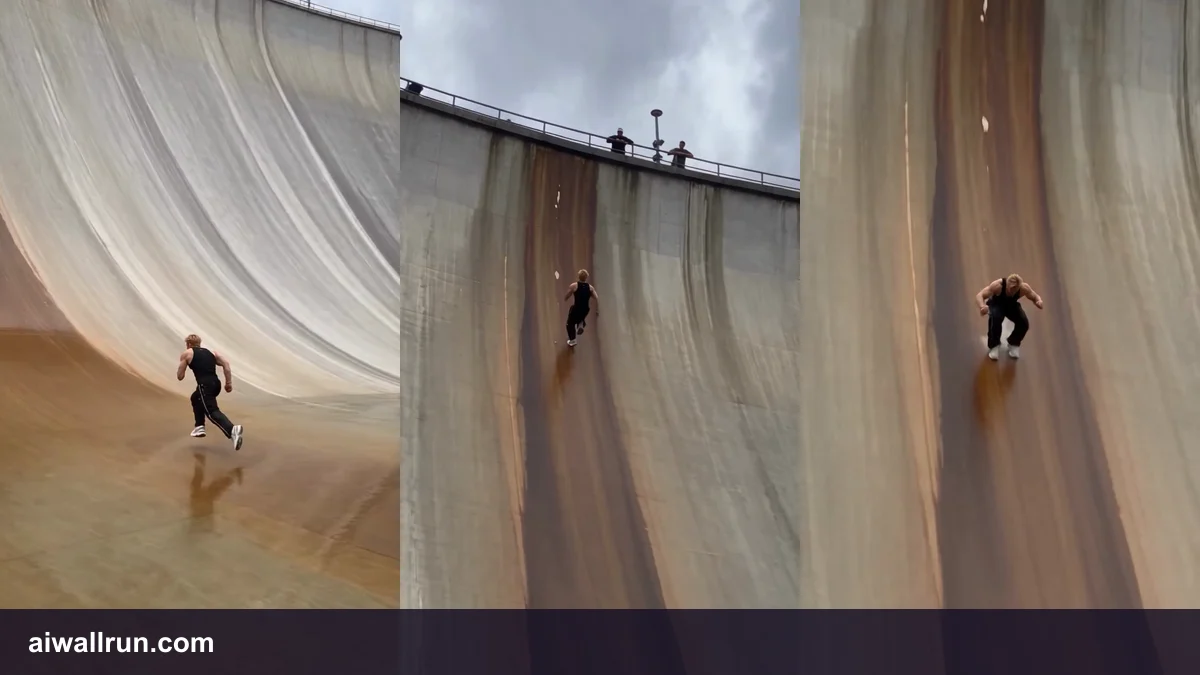
Runner in the generated dam sequence

A video of someone touching a wall is not, on its own, evidence of AI. Parkour is a physical discipline in which athletes adapt their movement to obstacles, as Parkour UK explains. The dam sprint made here has a different origin: the inputs are a portrait and a fixed stunt template. Nobody filmed the person in that portrait running up a dam.

Start with the source

Open the original post rather than a cropped repost. Look for a creator disclosure, an input photo paired with the result, or a link to a generator. If the uploader only shares compilations and the original is missing, leave the clip unverified. An absent label does not establish that a stunt happened.

What you found What it tells you
An AIWallRun output shown beside its input The portrait guided this generated character.
Different runners following the same dam, railing and landing A reason to compare the sequence with a template.
A blurred foot in one screenshot Too little evidence to identify how a video was made.

Compare the sequence, not just the height

Play two AI Wall Run video examples. Follow the railing instead of the runner: each approach leads into a flip above the crest, spray at the landing, then a close-up. The repeated sequence explains how different people appear to do the same stunt. It does not authenticate an unrelated clip that happens to include a wall.

For the background to the AI trend, start with the full sequence. To make a fictional version with your own photo, use the AI Wall Run generator. The reference clip is not a route or training demonstration.